What is media literacy?
Media literacy can be defined as the capacity to use critical and informed judgement while accessing, analysing, evaluating, and producing media information is known as media literacy. It entails acquiring a set of knowledge that allows people to interact with different media platforms while understanding the messages presented through media and being able to identify any potential biases, motives, and persuasion strategies. Having adequate media literacy enables people to actively engage with media rather than only receive it passively, allowing them to make sense of the massive quantity of information available in the contemporary media world. We can note that media literacy is especially important in today’s era, where disinformation, manipulation, and fake news spread quickly. People who are media literate have the advantage of making informed judgements, participating in insightful conversations, and actively contributing to a democratic and responsible media culture. More specifically, it is an essential skill for exercising critical though while circulating the web.
How do notable individuals use social media?
Social media is a powerful tool for notable people to advertise their personal branding since it enables users to create a genuine and approachable identity. Direct communication with fans and followers encourages relationship building and community networks. Influencers can make use of their platforms to share about initiatives, current events, spread awareness, or to influence the public eye in any other sort of manner. Their effect is further increased by working with colleagues and taking part in influencer marketing efforts. But with this influencial power also comes responsibility. In order to preserve a favourable public image and create deep relationships with their audience, anyone notable, or who has a large and diverse following, must be prudent with what they post to minimize the risks of offending anyone.
What are the benefits of being in the public eye and having a PLN?
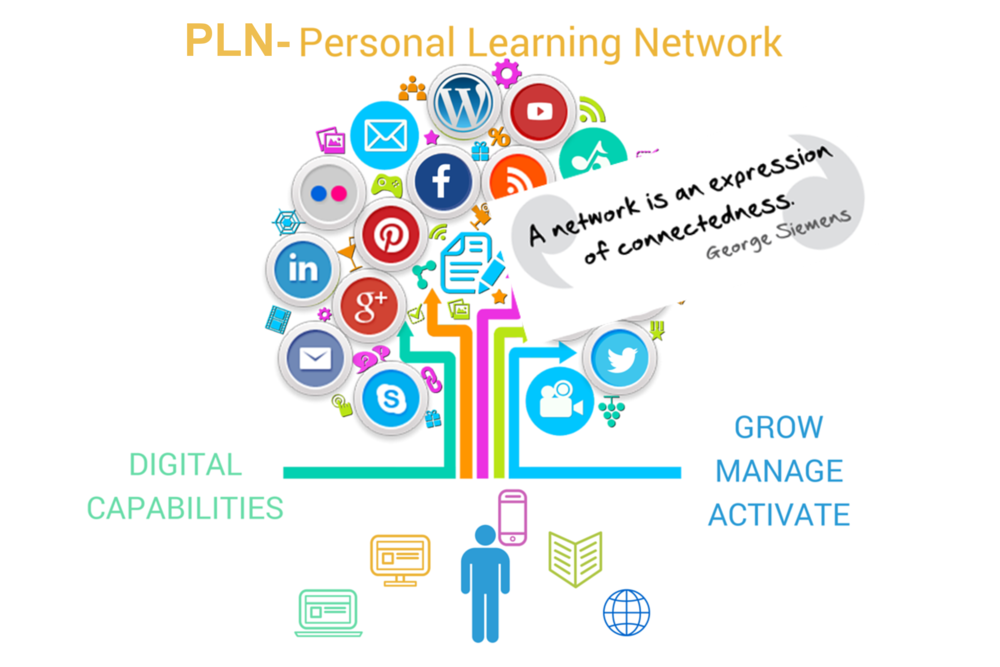
There are several benefits to being well-known and having a Personal Learning Network (PLN). People who position themselves within the public have greater exposure and influence, which gives them the power to sway public opinion, promote causes, and connect with other professionals. Their PLN gives them access to other viewpoints, ongoing learning opportunities, and a community. Building a personal brand increases credibility and opens doors to public speaking engagements. Being well-known also gives one access to insider knowledge and provides a platform for advocacy, both of which help communities change for the better. However, individuals must navigate challenges like privacy concerns and public scrutiny while maintaining a balance between public exposure and personal well-being.
Building a community with online tools provided by the employer can be limiting, what are the perceived restrictions and benefits?
Building a community with online tools provided by the employer presents both restrictions and benefits. The limitations arise from their limited flexibility and customization options, and access restrictions that may hinder outreach to a broader audience. Security concerns may also arise due to data protection measures, potentially impacting open communication. Additionally, dependency on the employer’s IT support might lead to delays in implementing updates or resolving technical issues.
However, there are also benefits to using these tools. One advantage is enhanced data privacy, as these tools typically follow the company’s data protection policies. Employees’ familiarity with the employer-provided device can lead to quicker adoption rates and increased participation within the community. The alignment of community goals with the overall company mission ensures that the platform serves the organization’s objectives effectively.
Delivering information in a connected society requires verifiable resources, how do you build a PLN to rely on?
When building a dependable PLN, you should start by defining your interests and objectives, identifying trustworthy sources of information, and using social media platforms to connect with experts and organizations. Furthermore, you should join a variety of diverse communities and forums to gain diverse perspectives while staying up to date with current events. Since there is so much uncredible information of the internet, you should make sure to filter the information you read to ensuring accuracy and reliability. Since reliability hold close ties to being engaged with your audience, you should remain active in your PLN by participating in discussions, sharing valuable content, and building connections with others. While it can take some time to build a dependable PLN, establishing a trusting community is valuable for building strong and knowledgeable relationships.
How do those, who are veteran storytellers, minimize the risk of sharing misinformation?
Veteran storytellers can minimize the risk of sharing misinformation through extensive research, verifying sources, and fact-checking information. They should prioritize transparency and avoid spreading unverified content. Maintaining a balanced perspective and considering multiple viewpoints may avoid controversy on hot topics. Misinformation often stems from unfiltered sources; hence, it is paramount to seek peer reviewed/credible content and stay updated on evolving information.
References
Navigating Social Journalism
A Handbook for Media Literacy and Citizen Journalism
By Martin Hirst
Chapter 4. The Political Economy of Fake News – pp.78
http://ezproxy.library.uvic.ca/login?url=https://www.taylorfrancis.com/books/9781315401263
21st Century Skills: Learning for Life in Our Times
By Trilling, B & Fadel, C
Chapter 4 – Digital Literacy Skills
21st-century skills learning for life in our times – University of Victoria (uvic.ca)
Leave a Reply